
This article provides general education and is not a diagnosis or an individualized treatment plan. Medication, laboratory, and symptom concerns should be discussed with your qualified healthcare team.
Fiber is often discussed as though it were one nutrient with one job. In reality, different fibers behave differently in the digestive tract. Some form a gel, some add bulk, and some are readily fermented by gut microbes. Those differences help explain why one fiber rich food may improve bowel regularity while another leaves you feeling bloated.
Understanding soluble and insoluble fiber can make food choices easier, but the categories are not perfect boxes. Most plant foods contain more than one type, and your portion, fluid intake, gut health, and rate of increase all influence how you respond.
Fiber is a family, not one ingredient
Dietary fiber includes carbohydrate components that are not fully digested in the small intestine. As they move through the digestive tract, their structure affects how they interact with water, stool, and gut microbes. This is why fiber may influence fullness, bowel regularity, cholesterol, and the glucose response to a meal in different ways.
The FDA Daily Value is 28 grams on a 2,000 calorie reference diet. That number is useful for interpreting a nutrition label, but it is not automatically the right clinical target for every person. Someone eating very little fiber may need time to work upward, while a person with certain digestive conditions may need a temporarily modified approach.
Soluble fiber
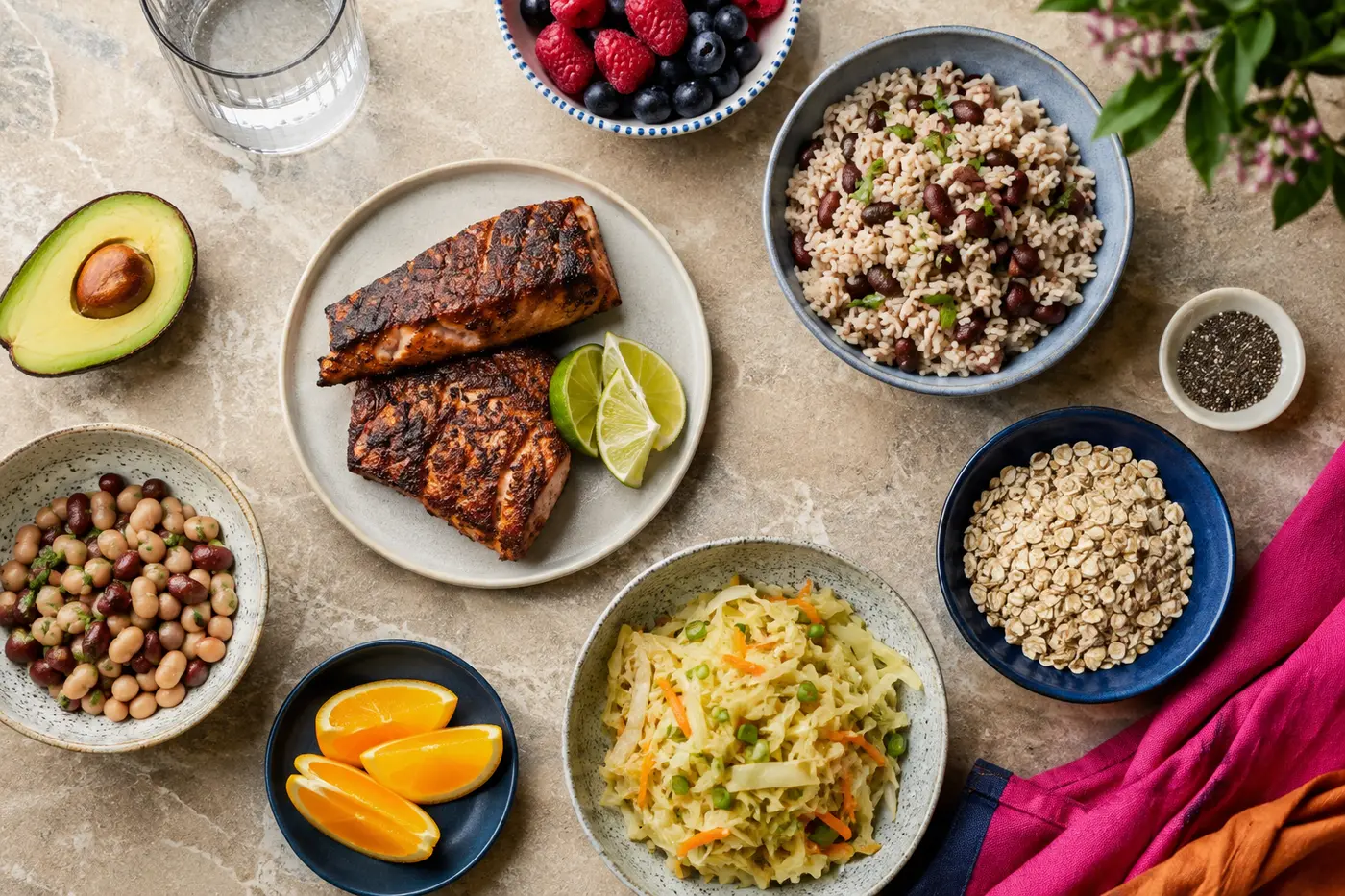
Soluble fibers dissolve or swell in water. Some form a gel, while others are readily fermented by gut microbes. Oats, barley, beans, lentils, apples, citrus, carrots, chia, and psyllium are commonly discussed as useful sources.
That gel forming quality is one reason certain soluble fibers can help soften firm stool or slow the movement of a meal through the digestive tract. Soluble fiber is also discussed in relation to cholesterol and the glucose response after eating. The effect depends on the specific fiber, the amount, the food it comes from, and the individual consuming it.
Insoluble fiber
Insoluble fibers do not dissolve in water in the same way. They can add bulk to stool and help material move through the digestive tract. Wheat bran, many whole grains, vegetable skins, leafy vegetables, nuts, and seeds are common examples.
Still, there is no need to sort every vegetable into a perfect category. An apple contains more than one kind of fiber, as do beans, vegetables, and whole grains. For most people, eating a varied range of plant foods is more practical than trying to track separate grams of soluble and insoluble fiber.
More fiber is not always better immediately
The desire to improve quickly can create the most common fiber mistake: adding too much too soon. A sudden jump can increase gas, bloating, cramping, or stool urgency because the digestive system and gut microbes have not had time to adapt. Increasing fiber gradually also makes it easier to identify which foods and portions feel best.
Fluid intake matters because fiber needs water to do its job well. People with gastroparesis, bowel narrowing, active inflammatory conditions, recent gastrointestinal surgery, or severe digestive symptoms may need a modified approach. In those situations, more fiber is not automatically better, and individualized medical guidance should take priority.
A practical way to increase fiber
Choose one change at a time. Add berries or chia to breakfast, include beans at lunch, serve an extra cooked vegetable at dinner, or replace one refined grain with a whole grain you tolerate. Keep the rest of the day familiar and observe your digestion for several days before adding something else.
This slower method may feel less dramatic, but it gives you better information. If symptoms appear, you can adjust the portion, preparation, timing, or food itself instead of abandoning fiber altogether. The goal is not to win a daily gram contest. It is to build a pattern that supports digestion and metabolic health while still feeling comfortable.