
This article provides general education and is not a diagnosis or an individualized treatment plan. Medication, laboratory, and symptom concerns should be discussed with your qualified healthcare team.
A new diagnosis of prediabetes or insulin resistance often sends people searching for a list of foods they can no longer eat. Carbohydrates become the enemy, favorite cultural foods feel off limits, and meals become more stressful than supportive.
A balanced approach begins somewhere different. Instead of judging one food in isolation, look at the entire meal, the portion, and the pattern you repeat over time. This leaves room for rice, fruit, bread, plantain, and potatoes while still supporting blood sugar, energy, and satisfaction.
Insulin resistance is not diagnosed by symptoms alone
Insulin helps move glucose from the bloodstream into cells where it can be used or stored. With insulin resistance, the cells do not respond as effectively, so the body may need to produce more insulin to manage glucose. This can occur alongside prediabetes, type 2 diabetes, PCOS, and other metabolic concerns, although many people have no obvious symptoms.
Because symptoms alone cannot confirm insulin resistance, diagnosis and monitoring belong with a qualified medical professional who can interpret health history and appropriate laboratory data. Nutrition and activity may be important parts of the plan, but medication, sleep, stress, genetics, menopause, and other health conditions can influence the same picture.
Start with a flexible plate
The plate method offers a useful starting structure: about half the plate from nonstarchy vegetables, one quarter from protein, and one quarter from a fiber rich carbohydrate. It is not a rigid prescription, and every meal does not have to fit the image perfectly. Its value is that it creates balance without requiring you to calculate every gram.
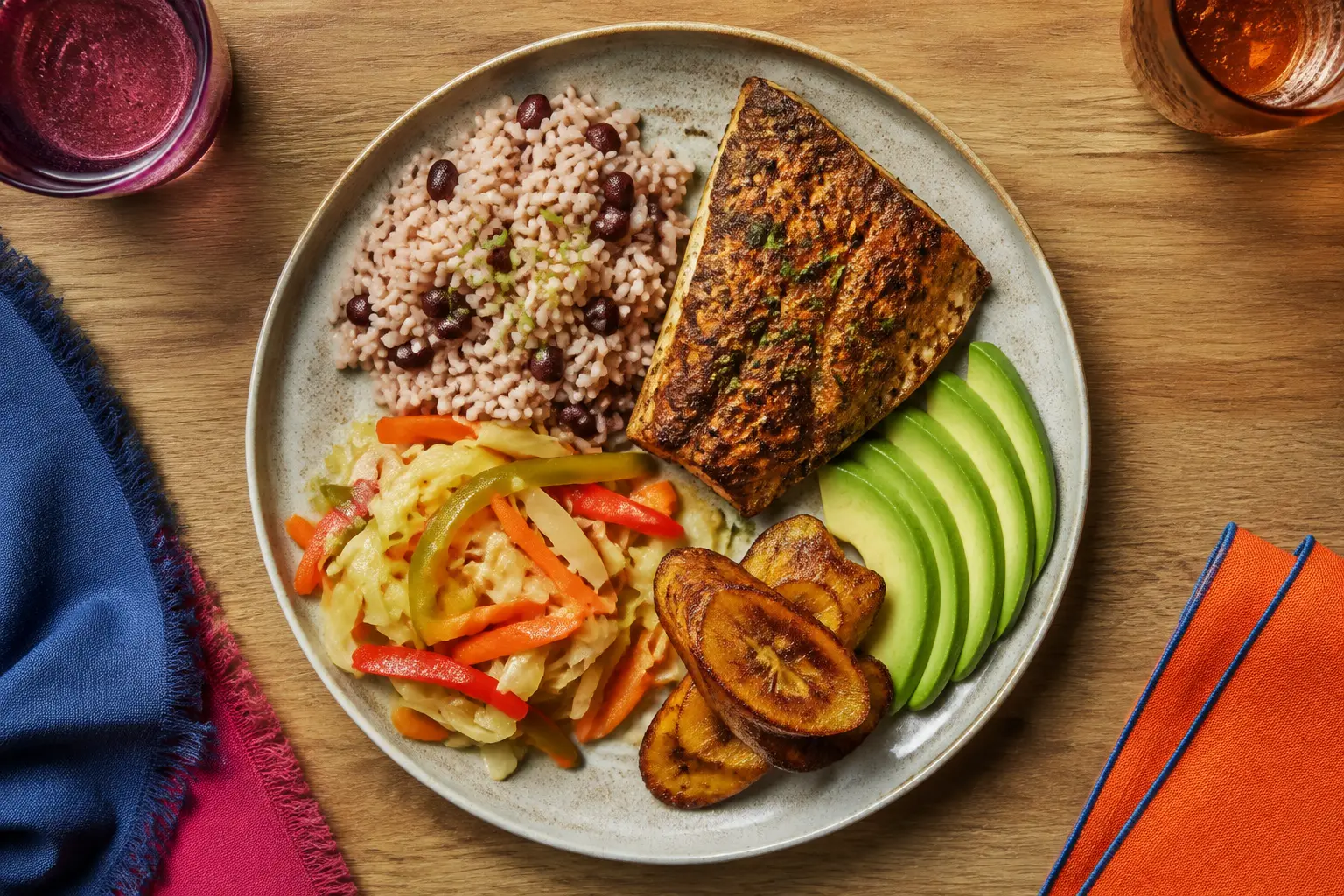
A Caribbean inspired plate might include jerk seasoned fish, sautéed cabbage, rice and peas, and avocado. Breakfast might be eggs with vegetables, toast, and fruit. Lunch could be lentil soup with a side salad and whole grain crackers. Cultural foods do not have to disappear. What matters is how the foods are portioned and paired within the full meal.
Pair carbohydrates instead of fearing them
This full meal view changes the carbohydrate conversation. Carbohydrate foods provide energy and may also provide fiber, vitamins, minerals, and cultural connection. Rather than eating them alone or removing them completely, pair rice, plantain, fruit, oats, bread, corn, or potatoes with protein, vegetables, and a satisfying fat when appropriate.
If you monitor glucose, use the information to look for repeated patterns rather than declaring a food good or bad after one reading. Sleep, stress, illness, activity, medication timing, portion size, and even the order in which foods are eaten can affect the result. Data is most helpful when it guides a reasonable adjustment, not when it creates fear around eating.
Movement and muscle belong in the plan
Meals are only one part of insulin sensitivity. Active muscle uses glucose, which is one reason both everyday movement and resistance training belong in the plan. Adults are generally advised to work toward at least 150 minutes of moderate intensity activity each week and muscle strengthening activity on two days, but the total can be divided into smaller, more manageable sessions.
For some people, a ten minute walk after a meal is a realistic place to begin. Others may be ready for structured strength training. Chronic conditions, injuries, neuropathy, or long periods of inactivity can change what is safe, so the starting point should match your current health and ability.
Make the plan measurable
The best plan is one you can observe and refine. Choose one meal to improve, one movement routine to repeat, and one outcome to monitor for two weeks. That outcome might be afternoon energy, hunger between meals, meal consistency, home blood pressure, bowel regularity, or clinician guided glucose data.
A focused experiment teaches you more than a complete diet overhaul that lasts three days. Once the first change feels steady, you can decide what deserves attention next. This creates progress without requiring perfection.