
This article provides general education and is not a diagnosis or an individualized treatment plan. Medication, laboratory, and symptom concerns should be discussed with your qualified healthcare team.
Ladies, it has been a while since I have had the opportunity to speak with you from the heart.
Through my own experience and the many conversations I have had with women in my practice, I continue to see just how complex perimenopause can be. Woman after woman describes changes in her body that she does not understand. She may be experiencing exhaustion, brain fog, poor sleep, joint pain, tendon problems, vaginal dryness, mood changes, weight gain, or a loss of motivation.
Too often, these concerns are dismissed, treated separately, or blamed entirely on aging. It pains my heart because there is so much misinformation surrounding this stage of a woman's life.
Perimenopause is not the end of your period
Let us begin with something important: perimenopause is not the end of your period. That is menopause.
Menopause is reached after a woman has gone twelve consecutive months without a menstrual cycle. Perimenopause is the transition leading up to menopause. It can begin years before the final period, while a woman is still cycling. During this time, estrogen and progesterone may fluctuate dramatically, and symptoms can appear long before menstruation stops completely.
Hot flashes are not the whole estrogen story
I was recently told by a healthcare professional that because I was not experiencing hot flashes at that particular time, estrogen did not need to be part of the conversation.
That concerned me.
Hot flashes are one possible sign of hormonal change, but they are not the only sign. The absence of hot flashes does not tell us everything about a woman's hormonal health, symptoms, or overall wellbeing.
Estrogen affects far more than body temperature. Estrogen receptors are found throughout the body. Estrogen influences the brain, bones, skin, vaginal and urinary tissues, blood vessels, muscles, joints, tendons, and other connective tissues. When estrogen declines, the effects may show up in places that many women would never think to connect to their hormones.
Estrogen and cardiovascular health
Estrogen also has important effects within the cardiovascular system. It influences blood vessel function, cholesterol metabolism, inflammation, and the way the body responds to insulin. After menopause, a woman's cardiovascular risk begins to rise as the advantage women generally have before menopause gradually decreases.
This does not mean that every woman should take estrogen. It also does not mean that hormone therapy should be prescribed solely to prevent heart disease.
It means that the conversation should be complete and individualized. It should consider a woman's age, stage of menopause, symptoms, bone health, cardiovascular risk, medical history, family history, and personal preferences. It should never begin and end with whether she is having hot flashes.
What I noticed as a bodybuilder
This conversation has also become personal for me.
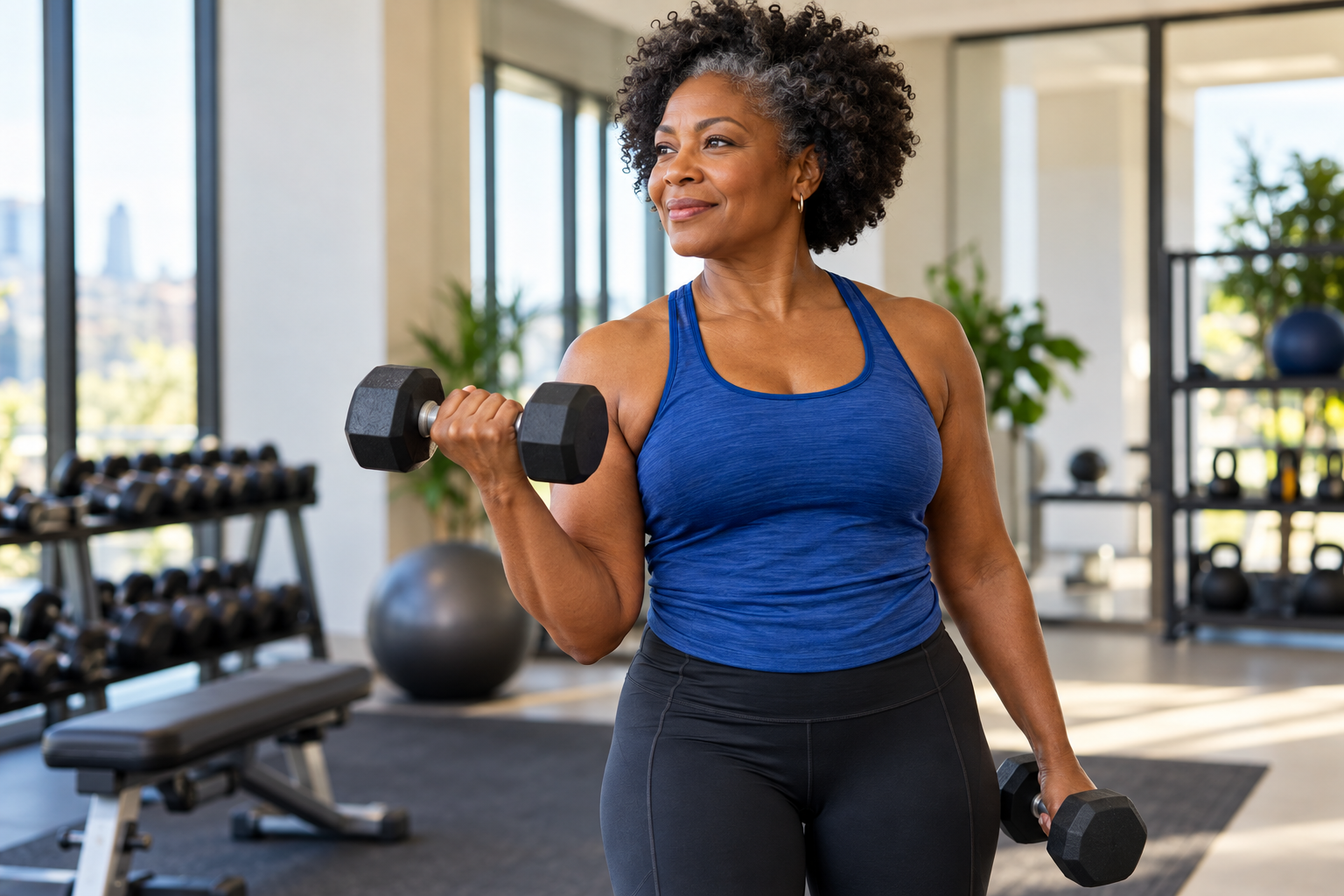
As a bodybuilder, I am accustomed to asking a lot of my body. I understand the difference between normal training soreness and pain that does not feel normal. I understand recovery, progressive training, nutrition, and the importance of listening to the body.
When I began experiencing persistent tendinopathy and changes in the way my body recovered, I paid attention.
I am not saying that declining estrogen is the only possible cause of my tendon problems. Tendon injuries are complex. Training demands, biomechanics, previous injuries, age, recovery, and tissue health can all contribute.
The musculoskeletal component of menopause
We should not ignore the growing research examining the relationship between estrogen loss and the musculoskeletal system. Declining estrogen may affect inflammation, muscle mass, bone density, collagen, connective tissue health, and the way muscles and tendons respond to physical stress.
The emerging term musculoskeletal syndrome of menopause describes a collection of concerns that may include joint pain, loss of muscle mass, declining bone density, frozen shoulder, and an increased vulnerability to tendon and ligament problems.
Yet many women are never told about this.
They are told to stretch more. Exercise harder. Lose weight. Accept that they are getting older. Or take pain medication without anyone asking whether the hormonal transition may be one part of the larger clinical picture.
Meet the three hero hormones
This is why I want us to talk about what I call our three hero hormones: estrogen, progesterone, and testosterone.
These hormones are not simply about reproduction. They influence how we think, sleep, move, recover, feel, and function.
Testosterone is more than a sex hormone. It is connected to sexual function and also plays a role in muscle, bone, and broader physiology.
Estrogen is more than the hormone responsible for our glow. Its influence is felt throughout the body, including the brain, bones, cardiovascular system, and musculoskeletal tissues.
Progesterone is more than the hormone that supports pregnancy. It is part of the hormonal rhythm that influences the menstrual cycle and protects the uterine lining. It also becomes an important part of the conversation when systemic estrogen is prescribed to a woman who still has her uterus.
When the familiar rhythm of these hormones begins to change, many women feel as though they have become strangers in their own bodies.
You are not imagining it. You are not weak. And you deserve more than a conversation that begins and ends with hot flashes.
Let us decode your journey together
This is why I do the work I do.
I help women decode what their bodies may be communicating. Together, we look at symptoms, nutrition, laboratory findings, health history, medications, lifestyle, and the realities of everyday life so that the pieces no longer feel disconnected.
I do not prescribe hormone therapy, but I can help you better understand your patterns, recognize the questions that deserve to be asked, and build a personalized nutrition and lifestyle strategy to support your body through perimenopause and menopause.
If you have been feeling dismissed, confused, or unlike yourself, you do not have to navigate this transition alone.
Sources and further reading
- National Institute on Aging: What Is Menopause?
- American College of Obstetricians and Gynecologists: Hormone Therapy for Menopause
- The 2022 Hormone Therapy Position Statement of The North American Menopause Society
- The Musculoskeletal Syndrome of Menopause
- Global Consensus Position Statement on the Use of Testosterone Therapy for Women